SHORT ANSWER
For a study session, block the social media apps that interrupt your work during a defined window. Keep learning and communication tools you need available, and decide how exceptions should work before the session starts. To keep TikTok and Instagram out of the session, see how to stop doomscrolling.
Give the session a concrete job
Choose the work before the timer: revise one chapter, draft an outline or complete a set of questions. “Study for the afternoon” is harder to evaluate than a specific piece of work. The block should protect that job, not become another task to manage.
Write down the materials you need. If a reference, class group or authentication app is essential, keep it outside your blocked selection. Protecting attention should not prevent you from opening the work itself.
Set the boundary before starting
- Choose the apps that usually pull you away from this work.
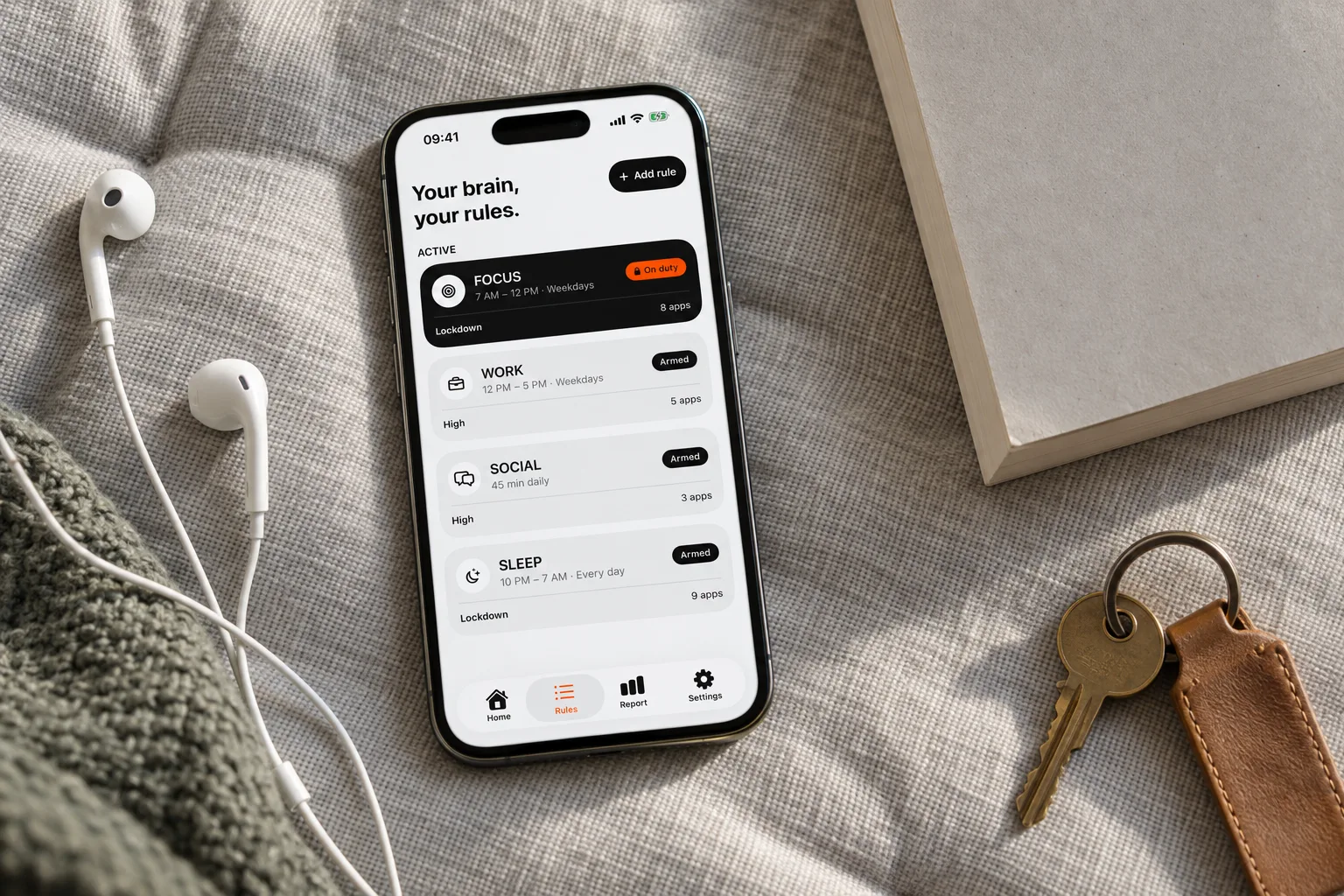
- In Bouncer, create a Rule or adapt the Focus preset.
- Set the scheduled start and end, including the days if the session repeats.
- Choose how access should work: a short pause with Normal, increasing resistance with High, or a fixed scheduled commitment with Lockdown.
- Check the apps and schedule, then activate the Rule.
Choose a Level for a real session
Normal can suit a session where a deliberate exception remains useful. High is designed for repeated requests: each successful unblock makes the next wait longer and the available session shorter. You still decide whether to complete the wait.
Lockdown keeps the scheduled window fixed. An active Rule cannot be edited or turned off early through an ordinary unblock. The limited local Emergency Pass is the documented exception. Read how it works before using Lockdown for an unfamiliar setup.
Decide what a break is for
A break can be a short walk, water, a message or a planned visit to an app. If you choose temporary access in Normal or High, the session lasts 5, 10 or 15 wall-clock minutes, with fewer choices as High escalates. It is not a timer that pauses when you leave the selected app.
You can also take a break without scrolling. The purpose is to return to your chosen work, so choose a break that you can finish. Bouncer does not determine what counts as a useful break for you.
Check the work, then the report
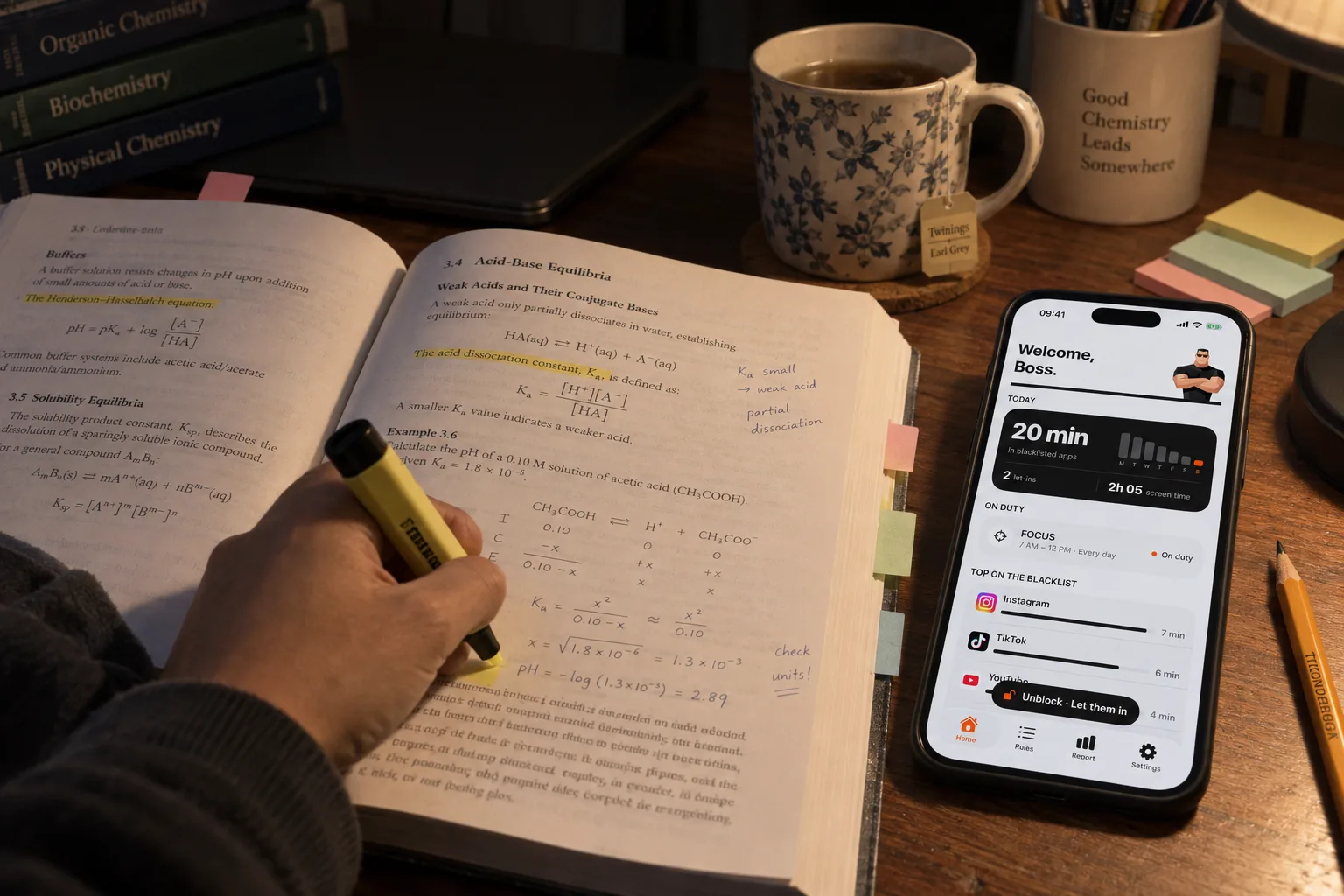
First ask whether the protected task moved forward. Then inspect the phone boundary: did the apps you selected stay out of that context? Bouncer’s Report can show time in blacklisted apps alongside total screen time, using daily averages for the selected period.
Those figures are context, not grades or a promise of better marks. If necessary tools kept getting blocked, refine the selection. If the session ended too early, adjust a future schedule when Rule changes are available.
Three study setups
The Levels are explained in Normal, High and Lockdown.
| Situation | Trigger | Level |
|---|---|---|
| Homework every weekday evening | Schedule, Mon–Fri, 6 PM – 8 PM | Normal: a short pause if you really need a break |
| Revision week before exams | Schedule on the revision days | High: each break costs more than the last |
| Exam morning or a deadline | Schedule with a clear end | Lockdown: no temporary unblock until the end |
Frequently asked questions
Which apps should stay available while studying?
The ones the work needs: a dictionary, a class group, an authenticator, music if it helps. Block the apps that pull you into endless scrolling.
Can I take short breaks?
With Normal or High, you can unblock for 5, 10 or 15 minutes after a wait. The time runs on the clock, so a 5-minute break ends after 5 minutes.
Can the block repeat every weekday?
Yes. A scheduled window can apply only on the days you choose, such as Monday to Friday.
A boundary you choose.
Start with a context you want to protect on your iPhone.